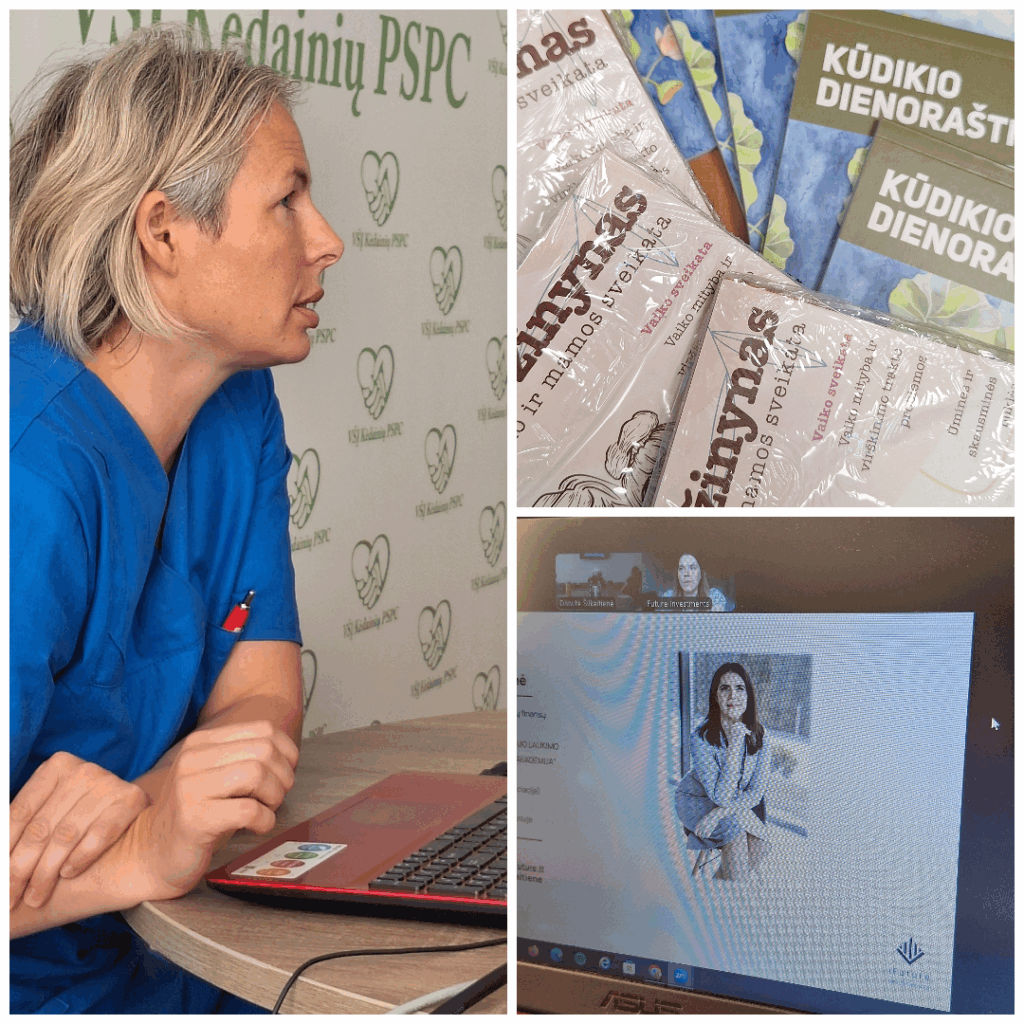
Visitors of the Kėdainiai District Maternity School gathered for a lecture/discussion "Preparing for childbirth. Childbirth"
During the lecture, the lecturer Danguolė Sakalauskienė, an obstetrician and gynaecologist, introduced the expectant mothers to the main signs of the onset of labour and the periods of labour. She provided information on the possible fetal positions and the course of labour depending on them. The most common methods of anaesthesia, their advantages and disadvantages were also discussed.
As expectant mothers are often worried about the question "When is it really time to go to the maternity hospital?", the lecturer provided information on the main signs of labour:
True cramps are regular (>1/10 min), the duration between cramps is uniform and progressively shorter, the intensity increases, the pain spreads throughout the abdomen and into the back, it cannot be suppressed by painkillers, and most importantly, the cervix changes. Fix the start of regular periods!
Fetal leakage. Record the time, amount and colour of fetal leakage!
A mucus plug is a mucous discharge from the vagina, often with blood mixed in. If a mucus plug appears, labour may start after a few hours or days. Therefore, you should wait for regular periods and then go to hospital.
The main periods of labour are discussed: the period of cervical ossification (dilation), which lasts from 12 to 16 hours for first-time mothers and 6 to 8 hours for repeat mothers. The ejection period, which lasts up to 2 hours (for nulliparous women), up to 1 hour (for parous women). Placental period. After the baby is born, the uterus empties and contracts, and after 10 to 15 minutes the placenta detaches from the uterine walls due to the increasing contraction of the uterus, and is 'born'.
The lecturer also presented the main means of anaesthesia: non-medication means (emotional support, position change (try to move more), relaxing bath or shower, back massage, stroking, breathing exercises, transcutaneous electrical nerve stimulation (TENS); medication means (homeopathic premedication, inhalation analgesia, opioids, regional anaesthesia (regional anelgesia - epidural anaesthetic)). The choice of measures is made on an individual basis, taking into account the mother's habits, preferences and, of course, medical availability.
Obstetrician-gynaecologist D. Sakalauskiene emphasised that the presence of a close person next to the woman giving birth and emotional support are very important. An understanding partner who knows how to ease the pain of labour is a great help to a successful birth. The doctor encouraged the mothers and their relatives not to be afraid to ask the staff about what is worrying or unclear and to find the answers to the questions that are troubling them at that moment together. Close and positive cooperation between parents and staff, mutual respect and patience are very important.
During the meeting, expectant mothers also had the opportunity to chat remotely with Giedra Matulaitiene, a personal finance consultant working in the iFuture INVESTMENTS team. During the meeting "Benefits for Parents", the most important financial topics of this period were discussed - benefits for expectant and post-natal parents. The lecturer invited you to contact her individually if you need to find all the answers to your questions.
The programme "Promoting a Healthy Start in Life" is funded by Kėdainiai District Municipality.