The Kėdainiai Primary Health Care Center is implementing the project “Organization and Provision of Dental Services for People with Disabilities in the Kėdainiai District Municipality”
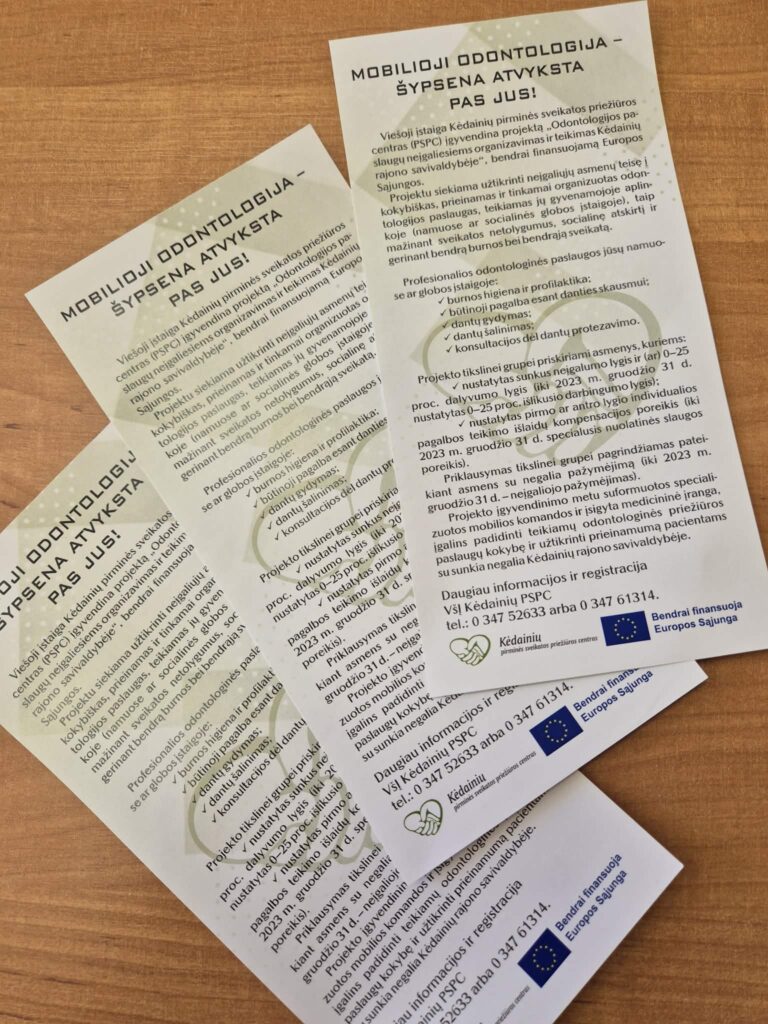
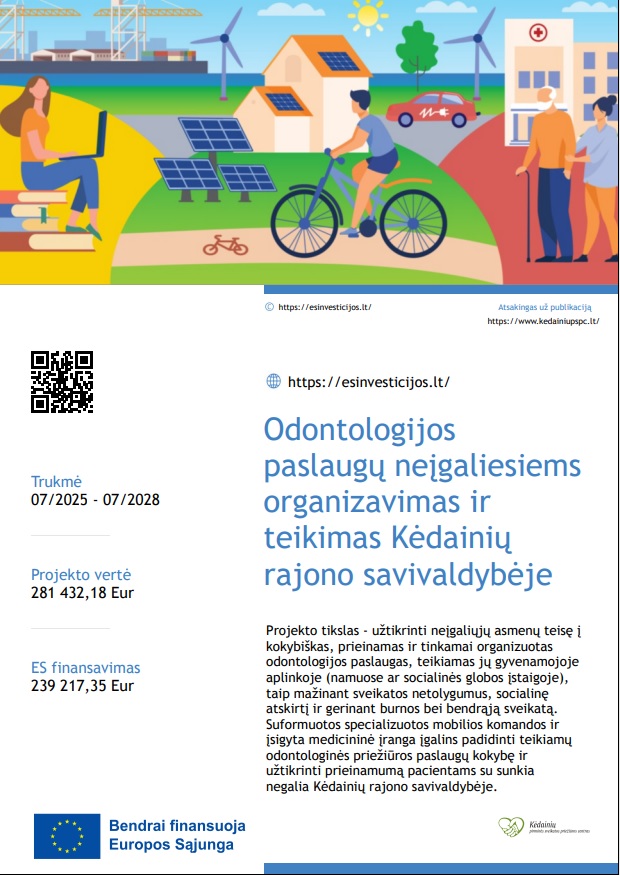
The Kėdainiai Primary Health Care Center (PSPC) is implementing the Kėdainiai District Municipality project “Organization and Provision of Dental Services for People with Disabilities in the Kėdainiai District Municipality.” Its goal is to ensure high-quality, accessible, and properly organized dental care for people with disabilities in their living environments—at home or in social care facilities. The aim is to reduce health inequalities and social exclusion and to improve oral and overall health.
The project partners—UAB “Kėdainių šeimos klinika” and UAB “Armedika klinika”—will also offer this service to their patients.
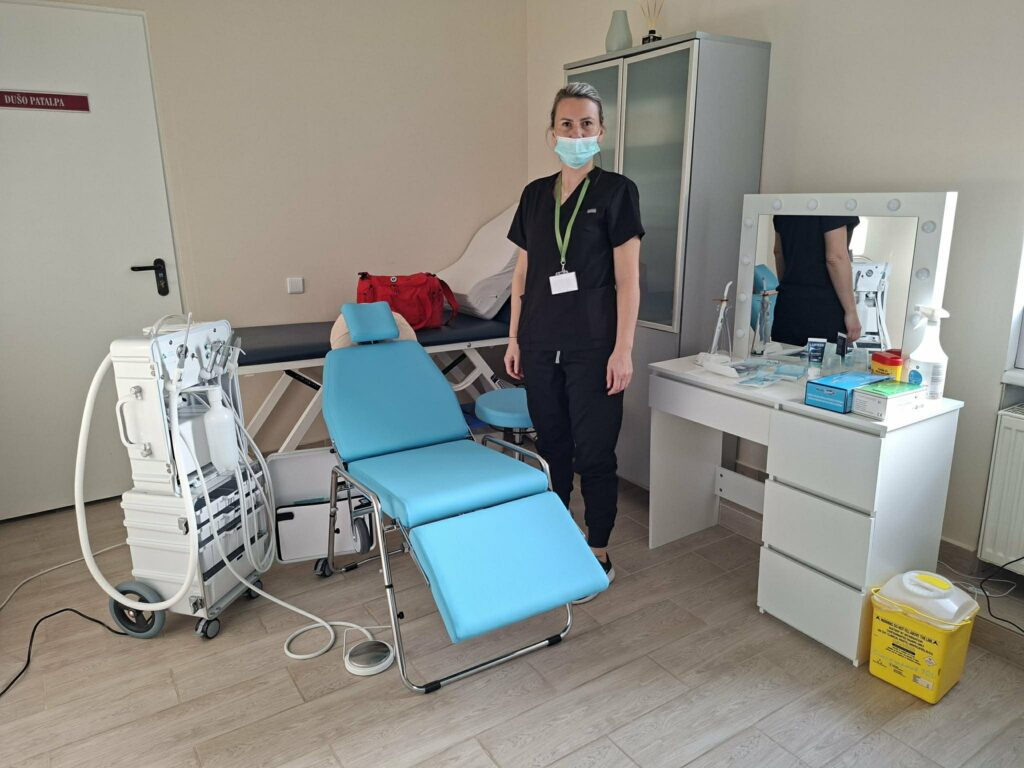
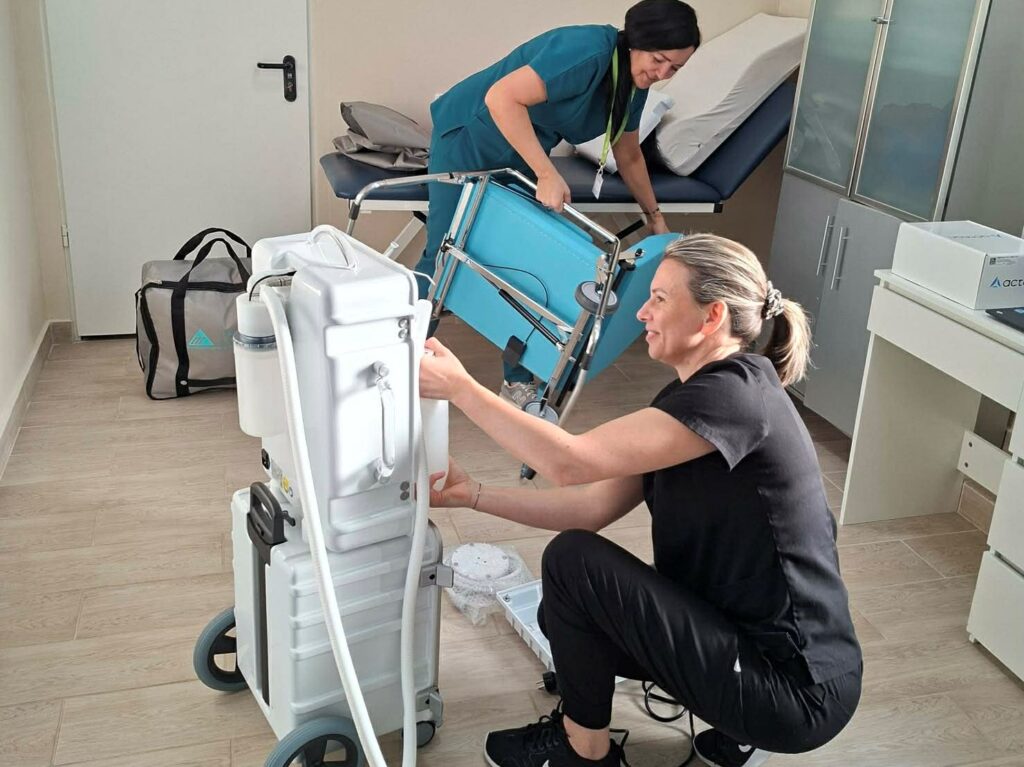
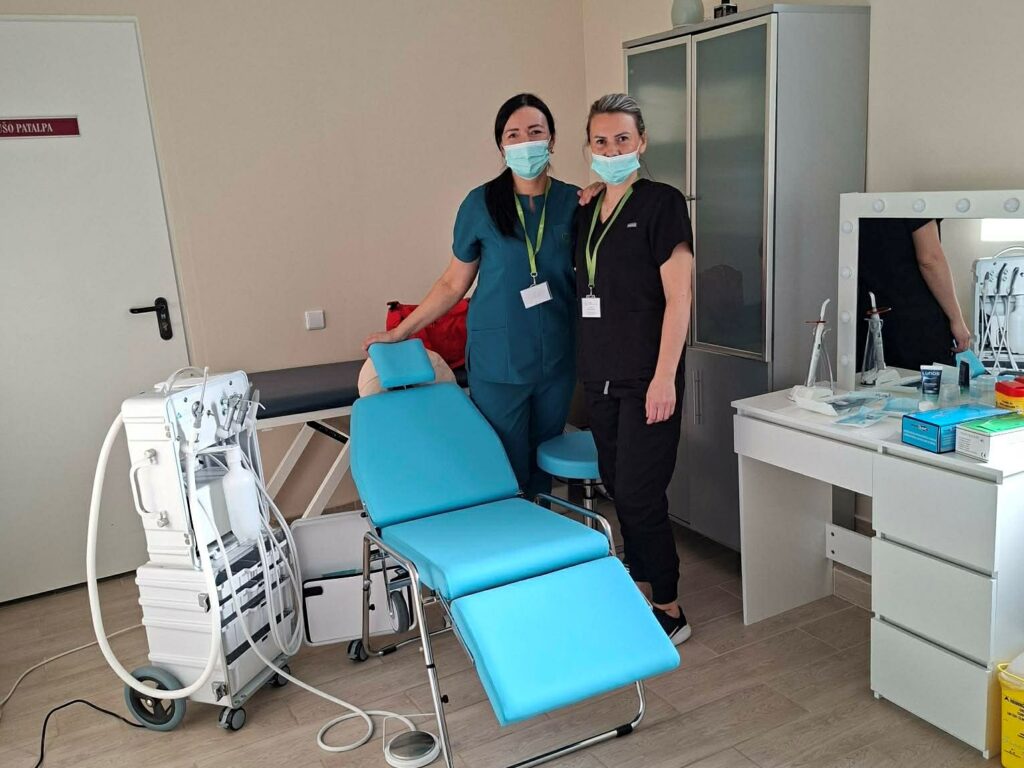
During the first phase of the project, care service descriptions and informational brochures were developed, staff participated in specialized training, and all necessary supplies and equipment were purchased.
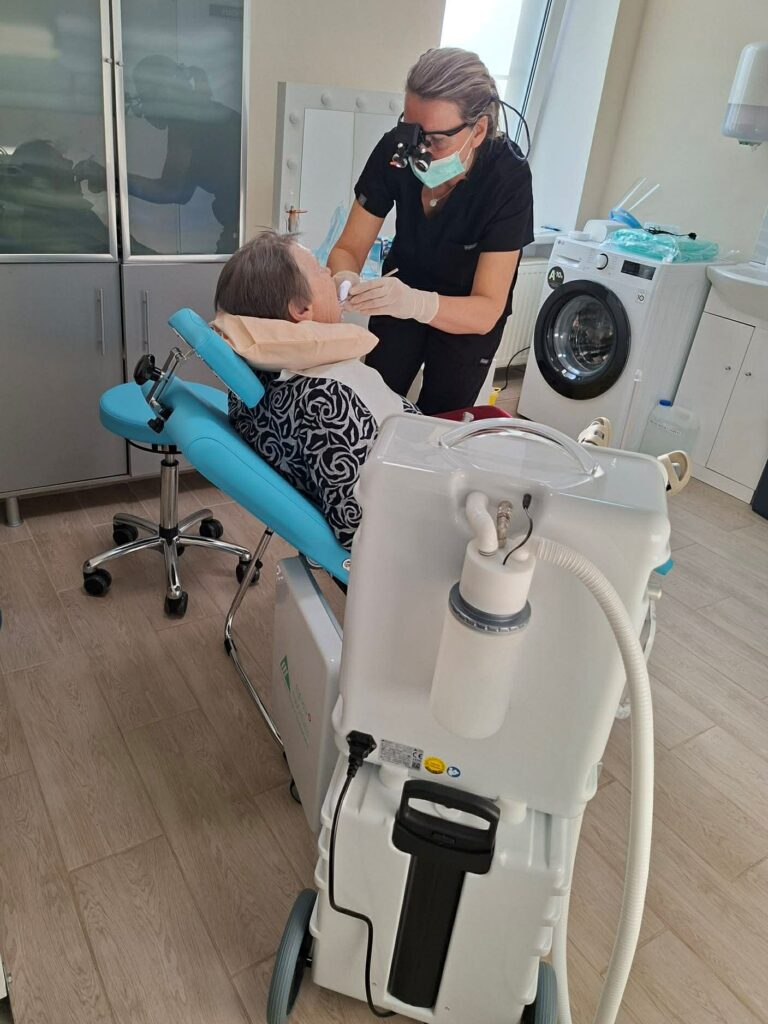
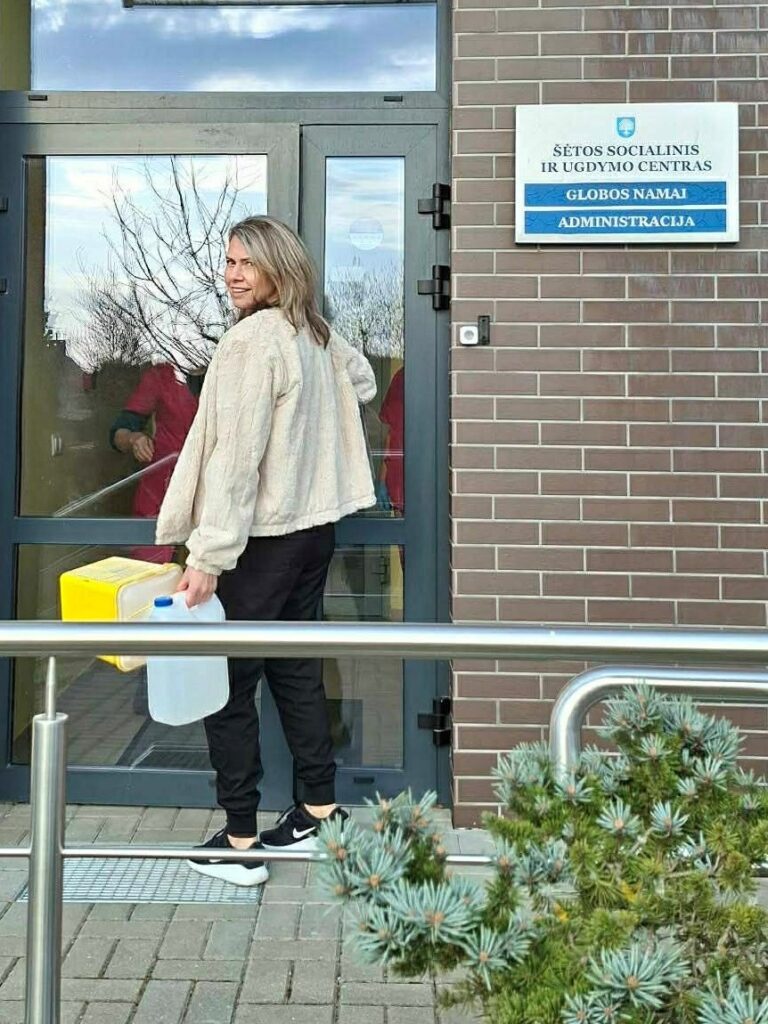
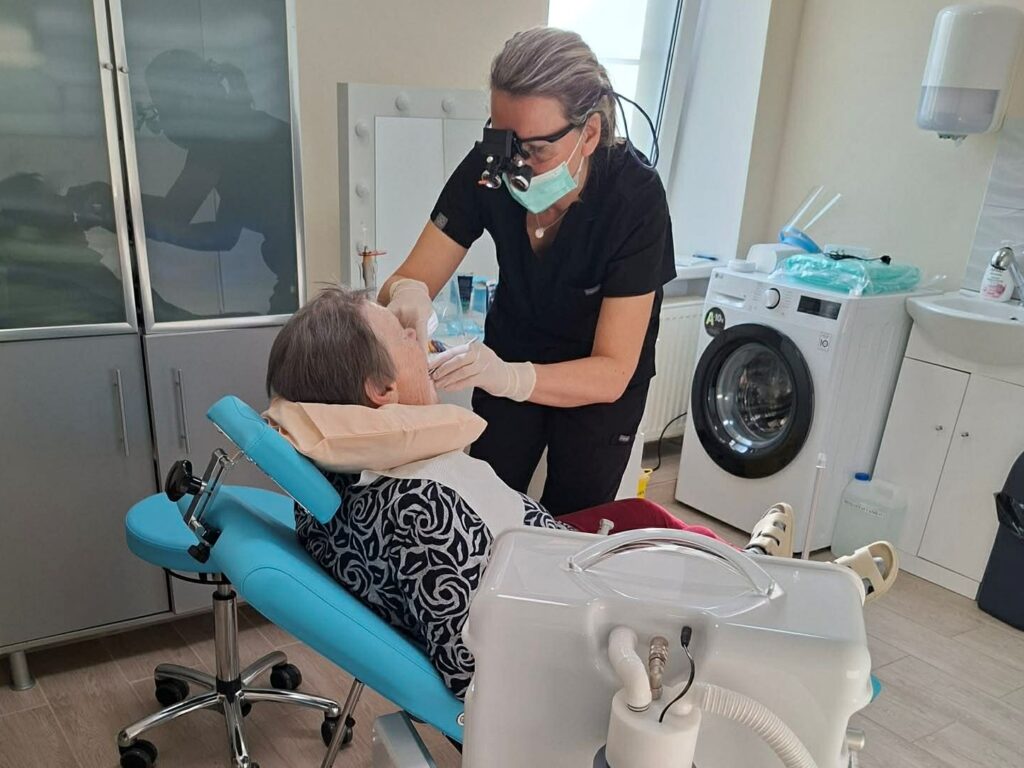
On March 16, dental hygienist Vilma Švelnikienė and Vilma Urbonavičienė, head nurse of the Dentistry Department and dental assistant, began working at the Šėta Social and Educational Center. On that day, dental care was provided to three patients. They were delighted to have the opportunity to receive professional care without leaving their place of residence and spoke very highly of the care provided.
On average, three visits are scheduled for each patient, depending on the condition of their mouth. As explained by Ugnė Jagminienė, acting head of the Dentistry Department at the Kėdainiai Primary Health Care Center, during the first visit, the patient is examined, the condition of the oral cavity is thoroughly assessed, diagnostics and procedures are performed, the oral hygiene index is determined, personal hygiene skills are evaluated, and a treatment plan is drawn up.
“This project allows us to reach patients for whom it is difficult or impossible to come to a healthcare facility due to their health condition. By visiting them at home, we can provide the necessary dental care and help ensure better oral health,” says Director Ugnė Jagminienė.
During follow-up visits, conservative treatment is provided, check-ups are conducted, oral hygiene procedures are performed, and additional recommendations are given to patients and their caregivers.
“This ensures timely and accessible dental care for people with disabilities who, due to their health condition, are unable to visit a medical facility—care is provided to them in their own homes,” notes project manager Jūratė Vaitonienė.
The project is funded by the European Union.