The Relationship Between a Family Doctor and a Patient: The Best Way to Show Appreciation Is a Sincere “Thank You”
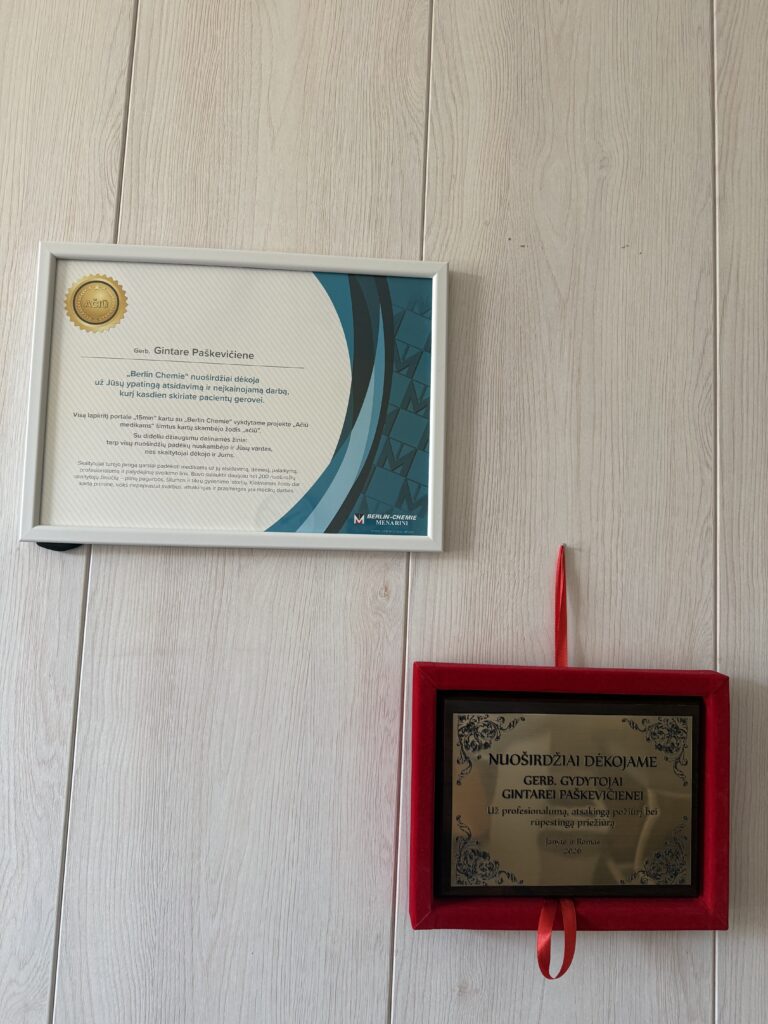
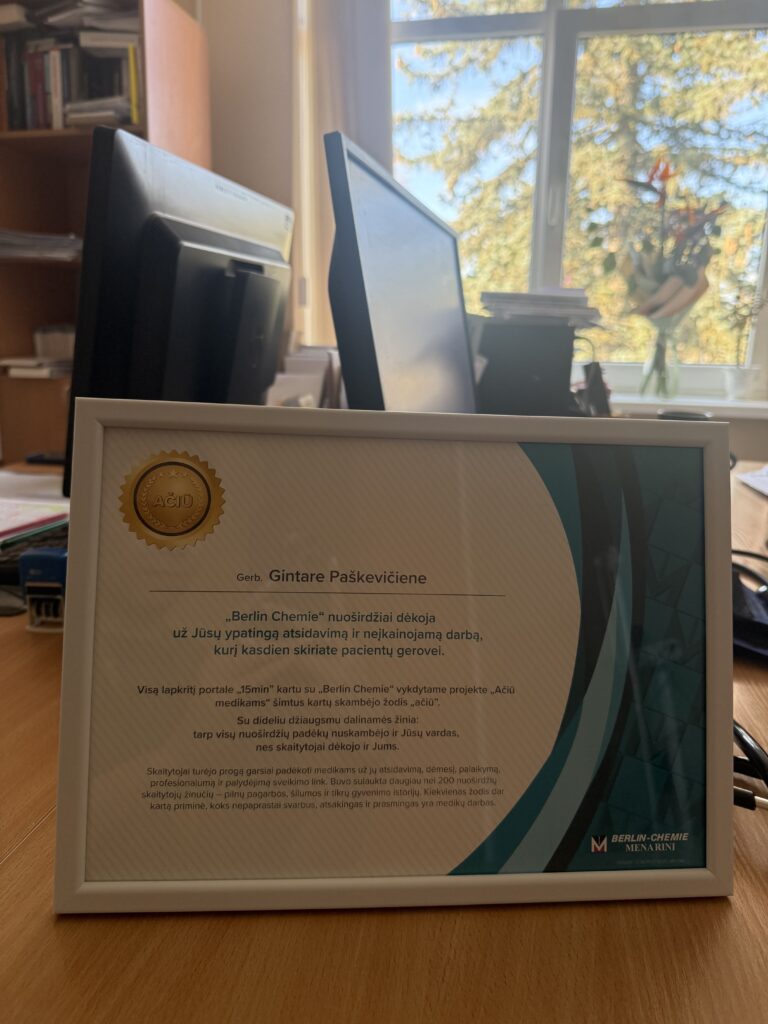
Gintarė Paškevičienė, a family physician at the Kėdainiai Primary Health Care Center, was awarded a letter of appreciation by the portalo “15min” together with ““Thank You, Doctors”—a project by “15min” and “Berlin Chemie”—patients express their gratitude.
On building trust-based relationships with patients, the meaning of work, and what the simple word ““thank you”—a conversation with family physician Gintarė Paškevičienė.
– How long have you been working as a family doctor at the Kėdainiai Primary Health Care Center?
– As a family physician, I will be celebrating my 15th anniversary on May 11. The Kėdainiai Primary Health Care Center is my first and, so far, only place of employment.
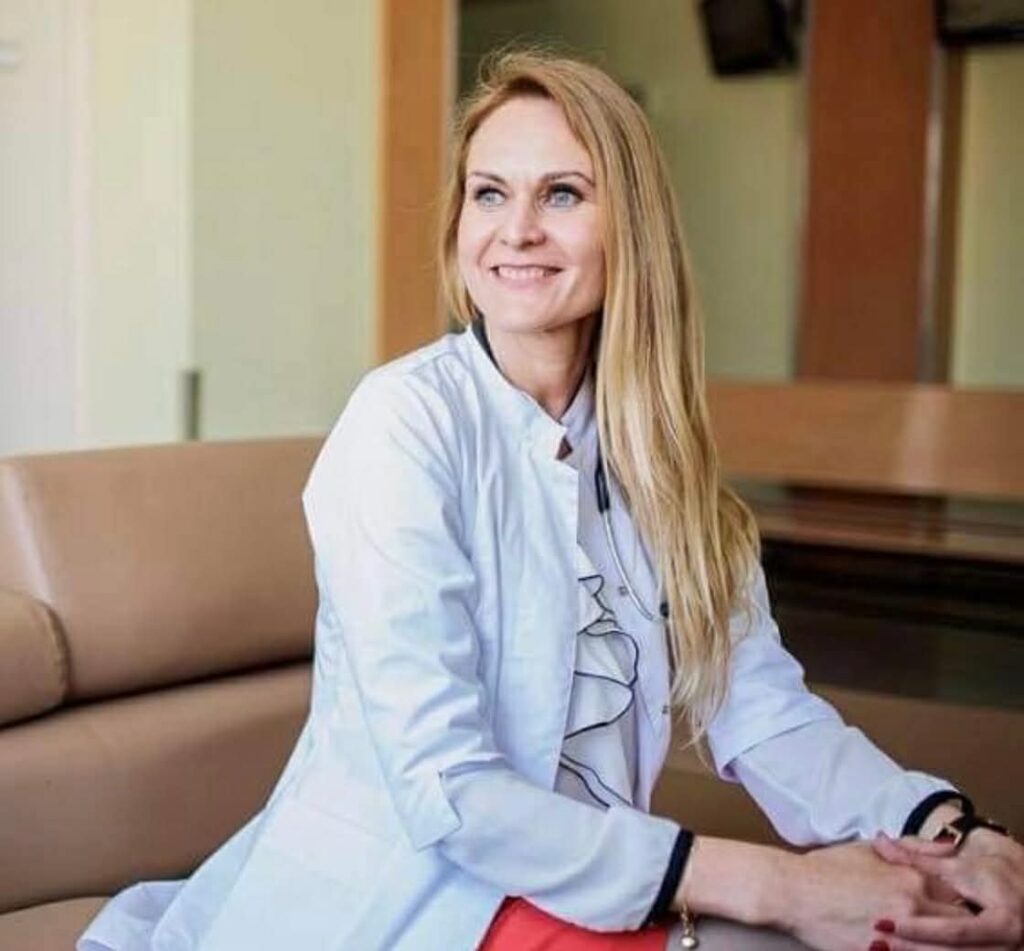
– Why did you choose to become a family doctor?
– I knew I wanted to be a doctor even while I was still in school, and I decided to become a family physician during my studies. As we studied and did our rotations in various departments, I realized that I wanted continuity with patients—to see how they were doing, monitor changes in their health, and follow the course of their treatment. I also didn’t want to work night shifts.
– What does the relationship between a family doctor and a patient mean to you?
– First and foremost, it’s about trust and belief in one another. These are the most important factors that enable successful collaboration and help achieve the best treatment outcomes. If a patient trusts you, everything goes much more smoothly.
– How do you earn a patient’s trust?
– It’s an ongoing process with every visit—how you care for the patient, how much effort you put into fully resolving their problem. With every new patient, this journey begins anew—we build trust together. One of the most important things here is genuine care.
– What does a “thank you” from a patient mean to you?
– It means the world to me. I absolutely love my job, and I find great satisfaction in being able to help people. I spare no time or effort—I do everything I can to ensure my patients are well. That “thank you” makes it all worthwhile. Sometimes, even seeing tears in a patient’s eyes really touches me and lifts my spirits.
– Do you remember your first thank-you note?
– Yes, I remember it very well. She was a difficult patient who had been under my care since my very first days on the job. She wrote a thank-you note in the newspaper, which was later reposted on other websites. It was the first such heartfelt and memorable expression of gratitude. I’m still in touch with this patient to this day.
– How do you feel about receiving the “Thank You to Medical Professionals” letter of appreciation?
– Every word of thanks warms the heart and confirms that you’re on the right path. When you’re working, you never expect thanks—you just do your job. There was a time when I was really in a rush, running to a meeting, and someone handed me a thank-you note. At first, I wondered what it was. When I opened it and read the note, I paused for a moment.
– Do you know how many thank-yous you’ve received in total?
– I don’t actually keep track, but there are quite a few. Patients express their gratitude both on our Kėdainiai PSPC website and in person every day—it’s very gratifying.
– What motivates you most in this job?
– What motivates me is the fact that I can be the first person to help a patient—to point them in the right direction, identify the problem, and help solve it. In short, it’s the opportunity to help someone.
– What would you like to say to your patients?
– I would like to sincerely thank you for your warm connection, for your trust, for your words of thanks, and for the tears of gratitude that move me deeply. Thank you.