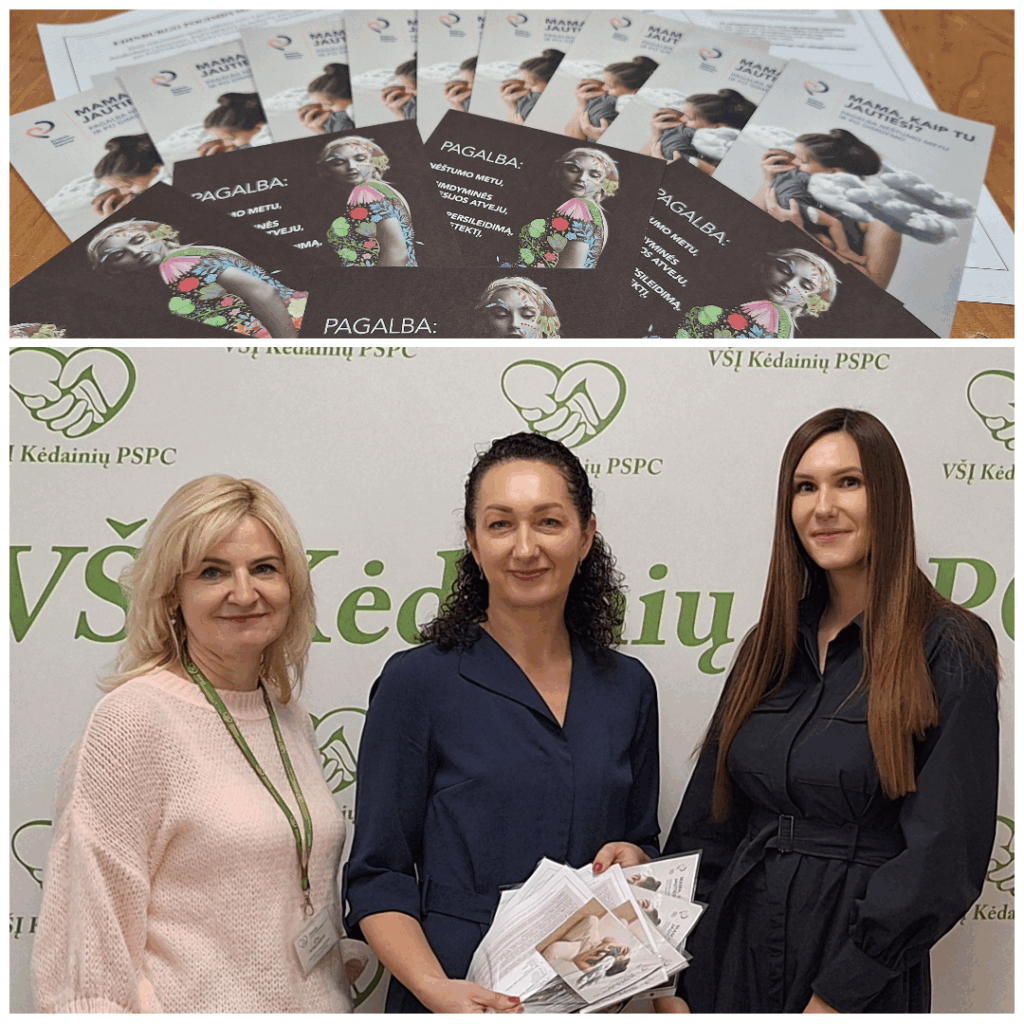
Visitors to the Maternity School gathered for a lecture/discussion on "Prevention of Postpartum Depression"
During the lecture/discussion, the lecturer - Simona Kutavičė, a medical psychologist at the Mental Health Unit of the Public Institution Kėdainiai PSPC, presented what postpartum depression is, how to recognise it, what to do for the mother and the people around her and, most importantly, where to find help.
The psychologist discussed the physiological changes that are linked to psychological well-being after childbirth. It is important for couples to be aware that after childbirth there will be big changes and that these changes will cover different areas, even problems within the couple. There is an increase in the woman's emotionality and sensitivity, a change in her relationship with herself and with her partner, in her attitudes and values.
According to Kutavičė, during childbirth, various systems are activated - one of them is the reward system, which helps to facilitate the experience of raising a child, as well as the related hormone of happiness and love, oxytocin. If the birth was not emotionally difficult, it is likely that these systems will be activated properly and this will make it easier for the woman to experience a more positive experience. But if the birth was complicated and the woman is stressed, there is a risk that the stress hormone cortisol may dominate. Motherhood will then be more difficult to experience, emotions may be depressed, and the newborn child may seem strange, alien, and unwilling to be approached, picked up, touched, etc.
It is likely that the woman will sink into a depressive state and if she needs help from professionals, she will need to be more motivated and have a different way of seeing herself. In any case, a woman needs to know that she is not alone.
And what can we do to avoid this state of mind? The psychologist listed protective factors such as a safe and calm environment, both partners preparing to become parents, taking care of themselves, etc. The lecturer provided information on emotional helplines in Lithuania and free emotional and psychological support.
On that day, expectant mothers also had the opportunity to learn about and practice various relaxation, breathing, and thought-guidance techniques. Lina Dubauskienė, a social worker, art therapy and relaxation practitioner at Kėdainiai PSPC, presented the benefits of relaxation during pregnancy and childbirth to the expectant mothers during the session "Relaxation, breathing and imagination exercises practice": minimising muscle tension in the whole body, increasing self-confidence before, during and after childbirth, reducing muscle tension in the uterus (prevention of imminent miscarriage and premature birth), shifting the focus away from the pain during childbirth, regulating arterial blood pressure and pulse, which is a good prevention of postnatal depression, etc.
"Some people prefer muscle tension and relaxation exercises, others are satisfied with calm, deep breathing, while others enjoy imagination exercises. It's very individual, so it's important to find the right way for you. Don't be discouraged if you don't succeed the first time. Try again, try differently. If you don't succeed on your own, consult a professional. And don't delay, start today", said L. Dubauskienė.
Danutė Šilkaitienė, Head of the Maternity School, shared with the visitors the educational material published by the Crisis Pregnancy Centre, as well as the Edinburgh Postnatal Depression Scale, which, by assessing one's well-being over the past seven days and answering the questions, helps to understand one's condition, to identify the risk of depression in time and to seek help.
The programme "Promoting a Healthy Start in Life" is funded by Kėdainiai District Municipality.