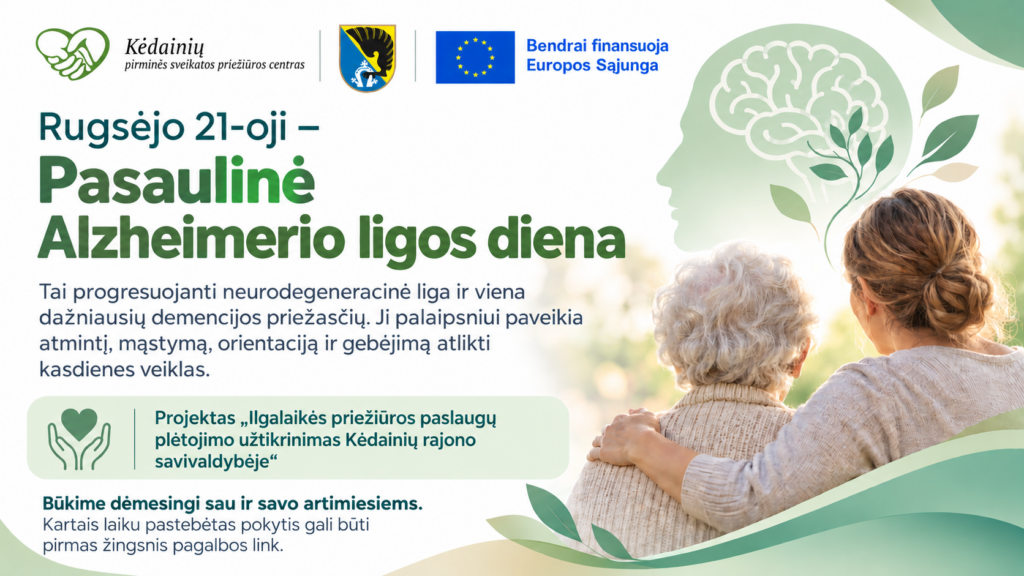
September 21 – World Alzheimer's Day
The Kėdainiai Primary Health Care Center, together with its partners, is implementing the Kėdainiai District Municipality project “Ensuring the Development of Long-Term Care Services in the Kėdainiai District Municipality,” which is co-financed by the European Union. This initiative aims to ensure the development of long-term care services in the Kėdainiai District Municipality by improving the healthcare infrastructure and increasing the accessibility and quality of services, with a particular focus on individuals suffering from Alzheimer’s disease, senile dementia, and those requiring palliative care.
Alzheimer's disease is a progressive neurodegenerative disorder and one of the most common causes of dementia. It gradually affects memory, thinking, orientation, and the ability to perform daily activities.
What signs should you look out for?
- increasing forgetfulness;
- difficulties in planning or performing routine tasks;
- feeling lost in a familiar environment;
- difficulties in finding the right words;
- a change in mood or behavior;
- a declining ability to take care of oneself independently.
It is important to know that not every memory problem is a sign of Alzheimer's disease. These changes can be caused by various health conditions, so if you notice them, it is a good idea to consult your family doctor.
What can we do to reduce the risk of dementia?
Although it is not possible to prevent all cases of Alzheimer's disease, a healthy lifestyle can help reduce the risk of dementia and maintain brain health:
- Let's stay physically active—let's walk regularly, exercise, and choose physical activities that are right for us.
- Let's eat a balanced diet—more vegetables, fruits, whole-grain products, fish, and other nutritious foods.
- Let's take care of our cardiovascular health—let's monitor our blood pressure, cholesterol, and blood glucose levels.
- Let's keep our brains active—let's read, learn new things, solve problems, and socialize.
- Let's not smoke and let's limit our alcohol consumption.
- Let's make sure we get good-quality sleep and enough rest.
- Let's take care of our hearing and vision—if we experience any problems, let's seek help.
- Let’s maintain our social connections—interacting and spending time with family and friends are also important for brain health.
Let's be mindful of ourselves and our loved ones. Sometimes, noticing a change early on can be the first step toward getting help.